

Three years after the massacre at Robb Elementary School, the Uvalde school district is rolling out a shiny new AI gun detection system, courtesy of a company called Omnilert. That company name totally doesn’t sound like it came straight out of some low-budget dystopian flick where a faceless tech conglomerate monitors your every move “for your safety.” Omnilert? Really? It’s one step away from calling it “SkyNet Junior.”
The new system is being offered for free as part of something Omnilert is calling the “Safe Havens” grant program. It scans school surveillance footage 24/7 looking for someone holding a gun. When it detects something, a human verifies the image and, if it checks out, first responders are alerted. Sounds high-tech and impressive, but it also sounds a lot like closing the barn door after the horses have already bolted.
Let’s not pretend this is a purely altruistic move. Sure, Omnilert’s covering the costs for three years, including hardware, setup, training, and support. But this is still a business, and businesses don’t hand out multi-year, multi-campus tech systems out of the kindness of their hearts. The real prize here is likely state or federal contracts. If the tech works and gets good press, don’t be surprised to see lawmakers tossing tax dollars at Omnilert like it’s the next big thing in school security.
But here’s the real question. Would this AI system have done anything to stop the Robb Elementary shooting?
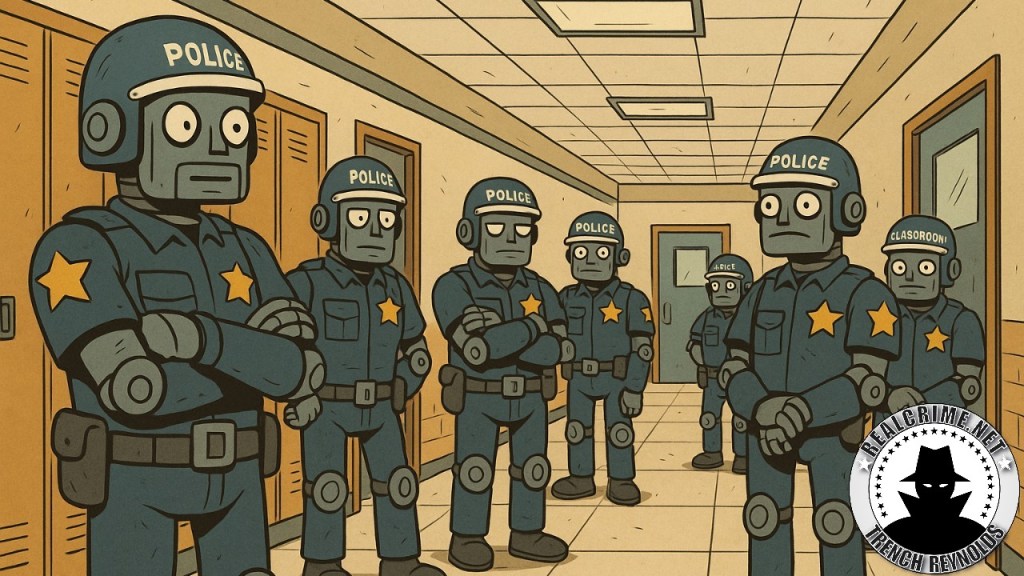
Let’s rewind. The gunman entered the school through an unlocked back door. Police were on the scene within minutes. Then they stood in the hallway for over an hour while kids were being shot. They had ballistic shields. They had rifles. They had numbers. What they didn’t have was the will to go in.
Would Omnilert’s AI have made them act faster? Would flashing alerts and video clips have changed the fact that officers were literally recorded saying, “I’m not trying to get clapped out” while children were bleeding out just feet away? AI doesn’t fix cowardice. It doesn’t fix broken leadership. It doesn’t replace the moral courage required to actually confront a mass shooter. And it certainly doesn’t undo the complete and total collapse of every level of response in that hallway.
Once again, this whole rollout feels more like security theater. Something to show the public that action is being taken. Something to make parents feel a little safer without doing anything to address the root causes. Because here’s the thing. The real problem hasn’t changed. It’s still far too easy for an 18-year-old in Texas to legally buy an AR-15. There’s still no serious political will in the state to pass meaningful gun control. We’re throwing AI at a problem that requires legislation, accountability, and hard choices about the kinds of weapons we allow in civilian hands.
Also, let’s talk about the technology itself. Omnilert says the system only looks for the shape of a human holding a brandished firearm and doesn’t use facial recognition or biometrics. That’s great for privacy, but how many false positives is this thing going to generate? How often is a student holding a camera tripod, a musical instrument, or a large umbrella going to trip the system? And what happens then? Do we go into lockdown mode because someone walked by with a saxophone case? The company can promise human verification all it wants, but anyone who’s dealt with automated systems knows how easily these things can misfire. How many disruptions are we going to have before people start ignoring the alerts altogether?
Yes, better school security is important. No one’s arguing that schools shouldn’t have tools to help prevent violence. But let’s not pretend AI cameras are some kind of magic fix. They’re not. They’re just another layer of tech on top of a foundation that’s still crumbling. Until we confront why these shootings happen in the first place and how the same politicians praising this new tech continue to block gun reform, we’re not making anyone truly safer. We’re just adding bells and whistles to the same broken system.
(Sources)



 Real Crime with Trench Reynolds
Leave a comment