

In the immediate aftermath of a ‘major’ school shooting (they’re all major, but you get what I mean), there’s usually a wave of copycat incidents that follow. From threats to weapons charges to even foiled plots. After the massacre at Annunciation Catholic School in Minneapolis, where two young students were killed and 18 others injured before the shooter took their own life, I expected to see the same disturbing pattern play out again. But so far, the ripple effect has been far quieter than usual. Not counting the hoax threats that came in the days just prior to the shooting. More on that soon.
The most recent incidents I’ve come across have been in Texas and Washington, D.C. In Schertz, Texas, two Clemens High School students were taken into custody the day after the Minneapolis shooting. According to police, one student said he wanted to “shoot up the school,” while another suggested he could provide the weapons. Neither had firearms, but the threats were serious enough that a third student reported them to administrators, who then involved law enforcement. Video evidence supported the charges, and both boys now face third-degree felony counts of making terrorist threats.
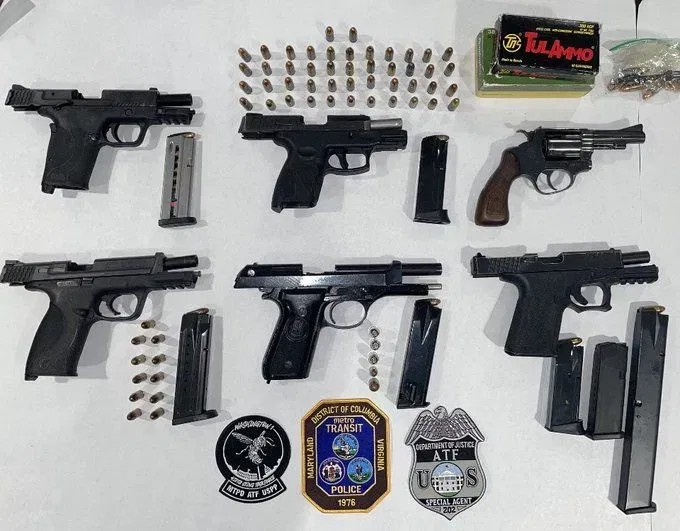
In Washington, D.C., the situation came much closer to becoming something deadly. On the night of the Minneapolis shooting, a 16-year-old student at IDEA Public Charter School was arrested after posting images of himself holding a gun on Instagram with the caption “omw to school.” Another image showed him armed while wearing a backpack. A search of his home turned up multiple firearms, reports vary between six and seven, along with ammunition. Authorities have charged him with weapons offenses, receiving stolen property, and making threats. The ATF and Metro Transit Police credited their joint task force with stopping what could have become another school shooting.
What’s striking is that these are the only two cases I’ve seen surface since the Minneapolis shooting. After previous tragedies that drew heavy national coverage, Parkland, Uvalde, etc., there was usually an immediate spike in threats and arrests all over the country. Sometimes it seemed like every local news station was covering at least one kid being caught making a threat online or bringing a weapon to school. This time, the reaction has been noticeably muted.
The question is why. On the one hand, it’s encouraging. Maybe students are finally realizing that these aren’t jokes anymore, that saying “I’m going to shoot up the school” online or to friends isn’t edgy or funny. It’s a felony that can land them in juvenile detention. Schools, parents, and law enforcement have spent years drilling that point home.
On the other hand, the timing might explain some of it. A lot of schools around the country haven’t even started their fall semester yet. Summer break naturally reduces the number of opportunities for threats to emerge in a school environment. Once classrooms are full again, we may see the usual spike.
Or perhaps there’s something else at play. Has there been a change in how teens process these tragedies, a shift in how threats are monitored and reported, or even a measure of deterrence from seeing peers dragged away in handcuffs for something they thought would be taken lightly? Whatever the reason, the lull is noticeable, and it raises an uncomfortable question. Is this a sign of progress, or are we just waiting for the other shoe to drop?
(Sources)



 Real Crime with Trench Reynolds
Leave a comment