
Police in Allegan County, Michigan, say 15-year-old Mya Barron went far beyond idle threats when she allegedly planned a mass attack on Allegan High School, where she was once a student but is now enrolled online. Investigators allege she stole her mother’s Glock pistol and two loaded magazines, then described online a plan to ram her father’s vehicle into the school cafeteria. According to the arrest affidavit, she intended to load the vehicle with gasoline and fireworks, crash it through the cafeteria windows using a cinderblock on the accelerator, and then enter with the firearm.
In her own words, Barron allegedly wrote that her base plan was to “get my mom’s Glock firearm, a few cans of gasoline, and a f— ton of fireworks.” She added, “If it does, that should cause enough chaos for me to get in, shoot the cop in the lunch room, and just go trigger happy on anyone I see.” She reportedly told police she intended to carry out the plan before her September 20 birthday, giving her plot an explicit deadline that suggests she was serious about acting.
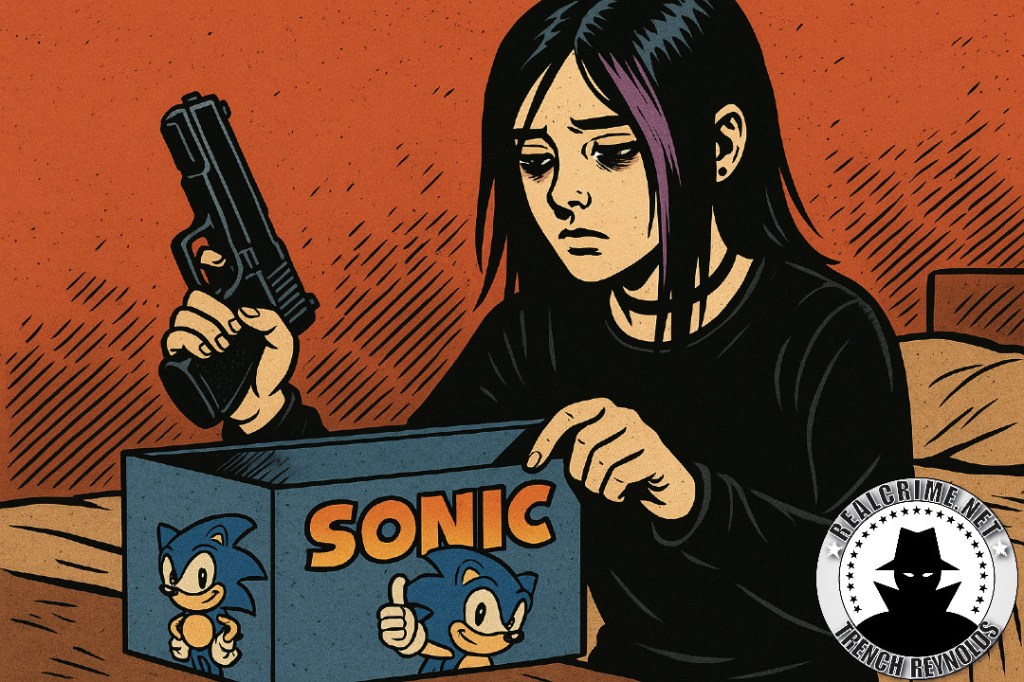
The FBI’s Detroit field office tipped off local police after detecting the threats. When officers arrived at her home, she allegedly admitted to the plan and revealed that she had already hidden the stolen gun in a Sega box in her room. Her mother, believing the firearm was locked in a safe in her bedroom, was shocked when officers discovered otherwise. Barron told police she could slip her hand inside the safe and remove both the gun and magazines.
Prosecutors have charged Barron as an adult with safe breaking, terrorism threats, and firearm counts. She remains held in the county’s juvenile center on a $75,000 bond.
The fact that this weapon was obtained from inside the home should trouble any parent who is a ‘responsible gun owner’™. The mother believed the pistol was secured, but clearly it was not. A gun safe is only as reliable as its weakest point, and every parent needs to treat firearm access as something that must be verified daily. The only responsible practice is to physically check that the weapon is still there, still secured, and still out of the reach of children.
But parents also cannot limit their vigilance to the physical world. Online spaces are where ideas like this take root and grow. If a teenager is idolizing school shooters, talking about mass violence, or becoming immersed in communities that glorify killers, that should not go unnoticed. Parents need to be watching what their children are posting, who they are talking to, and what kinds of communities they are joining. Just as a firearm should never go unchecked, a child’s online presence should never be left completely unsupervised.
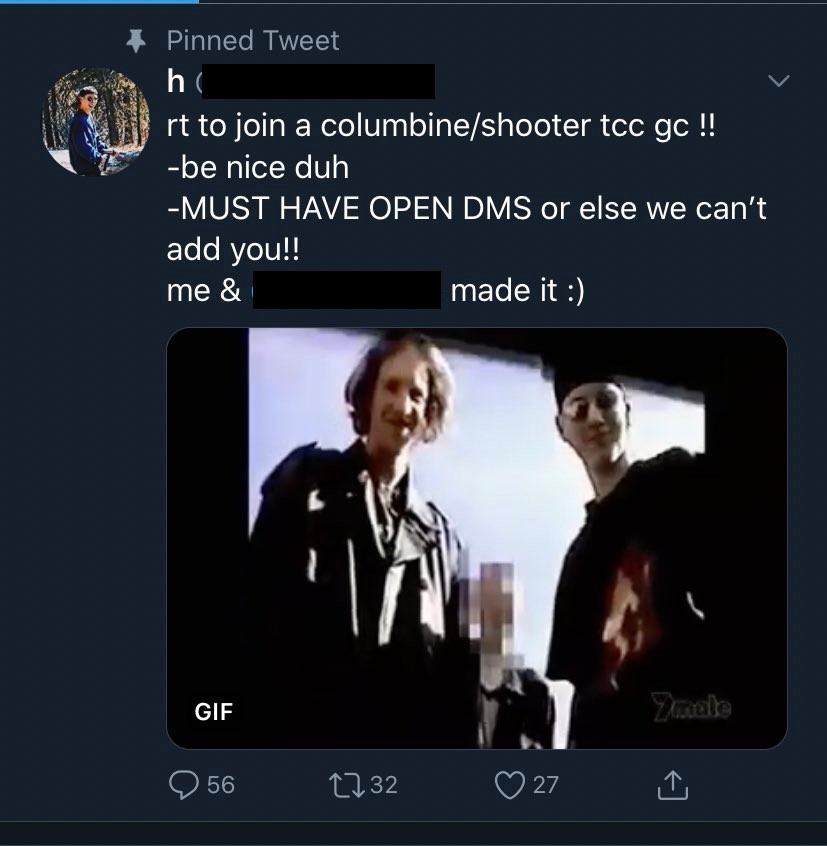
The way Barron reportedly described her plot reads like a page out of the Columbiner subculture. Columbiners are people, usually teens or young adults, who idolize the Columbine shooters, study their journals and videos, and even create fan art and online communities around them. For them, Columbine was not just a tragedy but a kind of mythology. They frame mass shooters as martyrs or rebels against a society they feel alienated from.
There’s also the darker side of the so-called true crime community. While many consume true crime content out of curiosity or a desire to understand criminal psychology, there are corners where the fascination curdles into outright admiration. Killers are given nicknames, aestheticized, and turned into icons. In those spaces, teenagers can convince themselves that plotting violence makes them part of a story bigger than themselves.
While the Venn diagram between Columbiners and the ‘True Crime Community’ isn’t a perfect circle, it’s pretty damn close.
Barron seems to have absorbed exactly that mindset. The emphasis on spectacle, chaos, and targeting a police officer mirrors the ritualized violence that Columbiners obsess over. It is performative, meant to echo past shooters and claim a place in that lineage. This is not just about a stolen gun and a broken safe. It is about how entire online ecosystems romanticize mass murder and how easily those ideas find their way into impressionable minds.
Without those influences, this might have been another case of a teenager making threats they never intended to act on. But when fascination with past killers collides with real-world access to weapons, the results can be lethal. That’s the danger of these subcultures. They take fantasy and give it a blueprint. Parents cannot afford to assume that what their children are watching, sharing, or admiring online is harmless. Because in cases like this, the warning signs were there, both in the home and on the internet.
(Source)



 Real Crime with Trench Reynolds
Leave a comment