

Two students are dead. Nine others were wounded. An MIT professor was murdered in his own home. And the man responsible, Claudio Neves Valente, never once expressed anything resembling remorse.
Instead, he left behind videos.
Before we get to those recordings, let’s rewind.
On December 13, Valente walked into Brown University’s Barus & Holley engineering and physics building during finals week. The building was unlocked, because of course it was. Students were inside doing exactly what they were supposed to be doing: studying. A review session was underway in one of the building’s largest classrooms.
Valente opened fire.
19-year-old Ella Cook and 18-year-old MukhammadAziz Umurzokov were killed. Nine others were shot. Chaos followed. Lockdowns spread across campus and into surrounding neighborhoods. For days, authorities chased bad leads, detained and released the wrong person, and reassured the public just long enough for that reassurance to collapse.
Two days later, Valente murdered MIT physics professor Nuno F. G. Loureiro at his home in Brookline, Massachusetts.
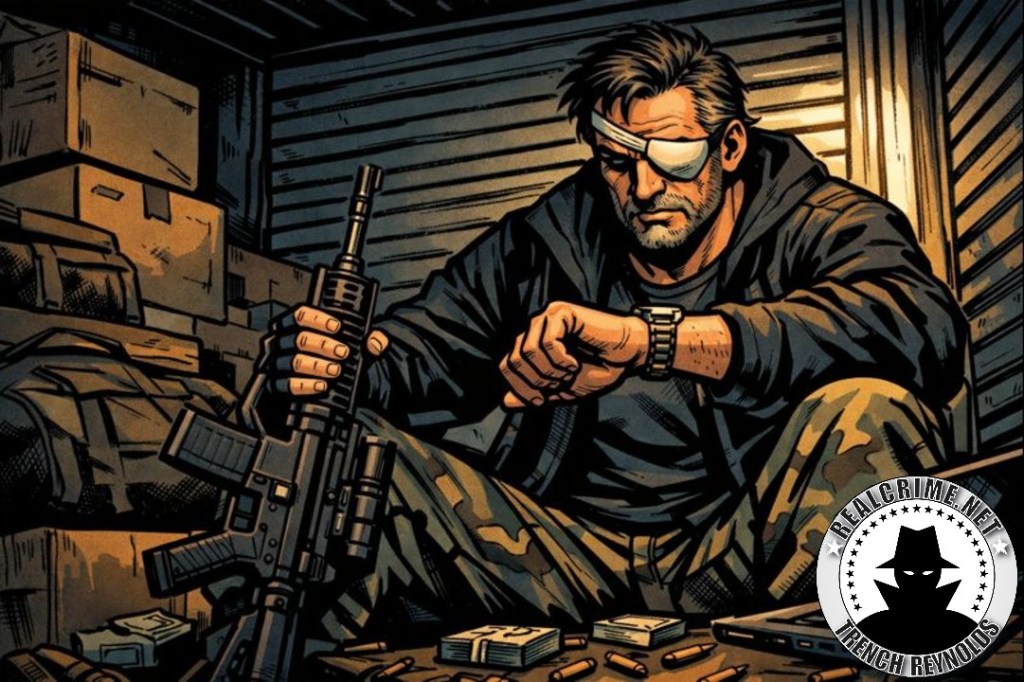
And then, while the public watched a manhunt unfold in real time, the shooter quietly killed himself in a New Hampshire storage unit he had been renting for years.
Yes, years.
That detail matters.
Investigators later confirmed that Valente had maintained that storage space for roughly three years. This was not a spur-of-the-moment escape plan. It was infrastructure. It was preparation. It was evidence of long-term intent sitting quietly in plain sight, waiting to be relevant.
Inside that unit, authorities found his body, firearms, ammunition, and electronic devices. On those devices were a series of short self-recorded videos, filmed after the shootings.
And if you were hoping for an explanation, you didn’t get one.
In the videos, Valente admits he planned the Brown University shooting for six semesters. Not six months. He explicitly names Brown as his intended target. He talks about logistics. He talks about his injuries. He talks about control. He talks about wanting to leave “on his own terms.”
What he does not do is explain why.
There is no coherent motive. No ideological manifesto. No grievance was articulated beyond vague resentment and self-pity. Instead, he insists he has nothing to apologize for. He mocks the idea of remorse. He blames his victims, students at Brown, for their own deaths. He complains about injuring his eye during one of the shootings, as if that were the true injustice here.
This is not someone seeking understanding. This is someone documenting his own self-importance.
Valente also seemed surprised that it took authorities so long to find him. He remarks on it directly in the videos, expressing disbelief that law enforcement hadn’t caught up to him sooner.
Honestly? He shouldn’t be.
This is the same investigation that paraded a ‘person of interest’ in front of the public only to release him hours later. The same investigation was marked by mixed messaging, delayed clarity, and turf friction. And it unfolded under the leadership of Kash Patel’s FBI, which has already demonstrated a remarkable talent for premature certainty followed by quiet retreat. If Valente was expecting a swift, competent manhunt, he clearly hadn’t been paying attention.
As for mental health, there’s a familiar footnote here. A former neighbor recalled Valente’s mother saying her son needed help but that he refused it. That detail matters too, but not in the way people often want it to.
You cannot help someone who does not want help.
Mental health resources are not magic spells. They require participation. They require willingness. And while mental illness is often invoked after mass shootings, Valente himself explicitly rejected that framing. He insisted he was sane. He dismissed psychological explanations as excuses. Whether anyone agrees with him is beside the point. What’s clear is that he did not seek treatment, did not accept intervention, and did not see himself as the problem.
Instead, he carried grudges.
Law enforcement sources now say those grudges stretched back roughly twenty years. Two decades of resentment, fixation, and perceived slights, all quietly fermenting. Valente never articulated them, but the shape is familiar.
As I’ve said before, Valente believed himself superior to those around him. Like many, he externalized failure. Like many, he nursed grievances long after everyone else moved on. And if I had to hazard a guess, I’d say he carried resentments against both Brown and Loureiro. Resentment fueled by perceived slights, stalled ambition, and envy of someone who succeeded where he did not.
Those grudges were not rooted in reality. They existed entirely inside his own egotistical mind.
The only person he should have had a grudge against was himself.
Instead, he chose students in a classroom. He chose a professor who had built a life and career. He chose violence as a way to settle imaginary scores.
And even at the end, alone in a storage unit he’d been paying for years in advance, he still couldn’t manage the one thing that might have mattered, accountability.
No apology. No remorse. No explanation.
Just entitlement, resentment, and the quiet confirmation that this was never about anything other than him.
(Sources)



 Real Crime with Trench Reynolds
Leave a comment