

It has been nearly eight years since May 18, 2018, when Dimitrios Pagourtzis walked into Santa Fe High School in Santa Fe, Texas, wearing a black trench coat and a shirt that read “Born to Kill,” armed with a shotgun and a .38 pistol taken from his parents’ home. By the time it was over, eight students and two teachers were dead. Thirteen more were wounded. A community was shattered, families were destroyed, and the rest of the country promptly moved on.
What didn’t move on was the case.
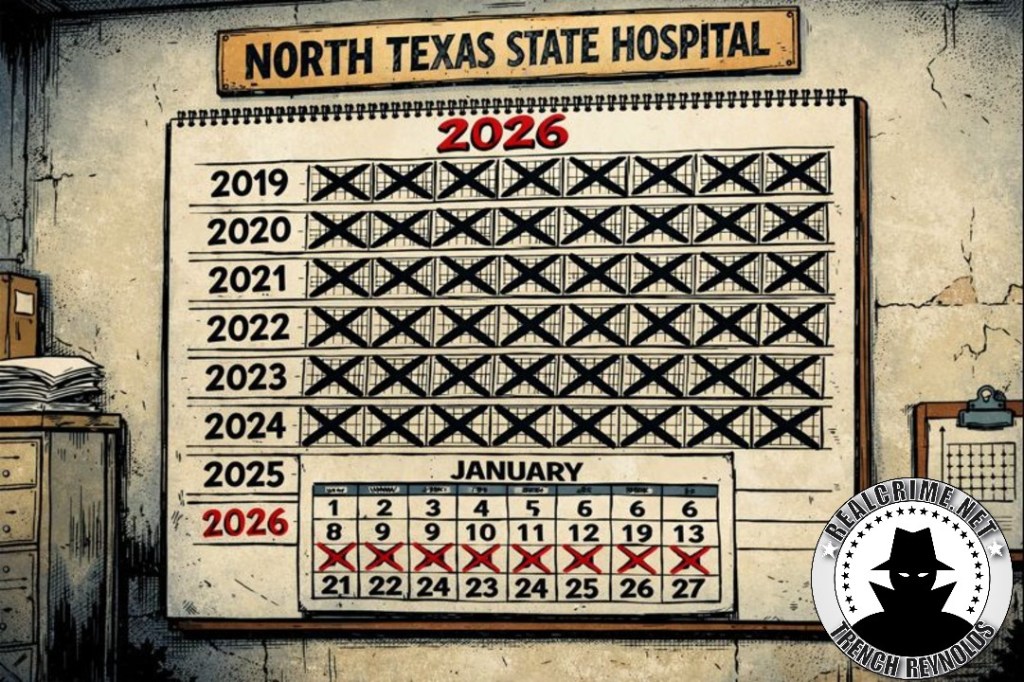
Since 2019, Pagourtzis has been ruled mentally incompetent to stand trial every year without exception. He is now in his mid-20s and has spent 2,234 days confined at North Texas State Hospital, a length of time that dwarfs the system’s own averages for restoring competency. The criminal case has remained frozen in place at both the state and federal levels, while families have been told again and again to wait.
I’ve written about this case for years because it is a perfect illustration of how the American justice system can fail victims without ever technically breaking the rules. I’ve pushed back against lazy narratives, rejected calls for shortcuts that would guarantee appellate reversals, and repeatedly said the same thing. Justice delayed is bad enough, but justice done incorrectly is worse.
Now we have the latest chapter.
According to a January 13, 2026, report, defense attorney Nick Poehl announced that doctors at North Texas State Hospital have once again concluded that Pagourtzis remains incompetent to stand trial. Not only that, but they are recommending he be recommitted for up to another 12 months. Poehl went a step further, stating what many people have quietly suspected for years. Pagourtzis may not be restorable to competency in any near-term timeframe, despite repeated treatment efforts.
That statement landed like a punch to the gut for the families, especially because several of them had just met with newly appointed Galveston County District Attorney Kenneth Cusick, who reportedly told them there was no new information. Some families later said they felt misled after learning that the hospital’s recommendation was already known.
Cusick’s office responded by insisting it does not agree with the assessment that Pagourtzis cannot be restored to competency and pledged to pursue all legal means available to bring him to trial. Cusick has said he plans to visit the hospital personally to speak with doctors and prepare for future legal action.
I don’t envy the position the DA is in. But after nearly eight years of the same reports producing the same results, families are right to be skeptical of reassurances that sound more like hope than strategy.
At this point, it’s important to clear up something that still gets muddled every time this case resurfaces. Competency to stand trial is not the same thing as an insanity defense.
Competency is about the defendant’s mental state right now. Under the Dusky standard, the court must determine whether the defendant has a rational and factual understanding of the proceedings and can assist their attorney in their own defense. If they can’t, the trial cannot legally move forward.
An insanity defense, on the other hand, deals with the defendant’s mental state at the time of the crime. It asks whether the person understood right from wrong when the act was committed. These are two entirely separate legal questions, and confusing them only muddies an already frustrating situation.
Even if Pagourtzis is never found competent to stand trial, that does not mean he was legally insane when he carried out the attack.
And I’ll be blunt here, as I’ve been before. I do not believe he was.
This was not an impulsive act detached from reality. It involved preparation, weapon selection, a documented obsession with Columbine, symbolic clothing choices, advance planning, and post-attack writings that reflected grievance and entitlement, not confusion. Those facts matter. They always have.
The tragedy here isn’t just that the case remains stalled. It’s that nearly eight years later, the families are still being asked to live in limbo while institutions debate what to do next. The justice system may insist it is following the rules, but from the outside, it increasingly looks like a machine that knows how to preserve itself far better than it knows how to deliver closure.
And for the people who buried their children, that distinction means very little.
(Source)




 Real Crime with Trench Reynolds
Leave a comment