


One year after a gunman walked into the cafeteria at Antioch High School and killed 16-year-old Josselin Corea Escalante, the official response looks exactly like what we’ve seen after every other school shooting in America. More security, more technology, more uniforms in hallways, and still no willingness to confront how the gun got there in the first place.
On January 22, 2025, 17-year-old Solomon Henderson entered Antioch High School’s cafeteria and fired ten rounds from a semi-automatic pistol. Josselin was killed, another student was grazed by a bullet, and Henderson then killed himself. The school was already equipped with an AI-powered gun detection system, a secured vestibule, and on-site school resource officers. None of it stopped him.
That matters, because a year later, parents are being told that the solution is more of the same.
At the one-year anniversary, families spoke publicly about fear, trauma, and the belief that Antioch High School needs additional officers and expanded security. Metro Nashville Public Schools highlighted its rollout of weapons detection systems and the expansion of the SRO program. Vendors were quoted. Numbers were cited. Five guns detected elsewhere were offered up as proof of effectiveness.
But Antioch had ‘state of the art’ security on the day Josselin was killed. The AI gun detection system failed to identify Henderson’s weapon. Cameras did not save her. Algorithms did not stop the shooting. The presence of armed officers elsewhere on campus did not prevent the attack.
This isn’t a technological glitch. It’s the predictable limitation of trying to detect violence after a gun has already entered the building.
No amount of cameras can undo the fact that once a firearm is in a student’s hands, the margin for error collapses to zero. Schools are not hardened checkpoints. They are crowded, dynamic environments filled with children. Any system that depends on perfect detection and instantaneous response is a system that will eventually fail.
And it will keep failing as long as guns remain easily accessible to children outside school walls.
While the public discussion fixated on security upgrades, another piece of the Antioch story quietly moved forward through law enforcement channels. Earlier this month, Metro Nashville Police announced they had obtained a warrant for Henderson’s mother, 40-year-old Chrysta Thomas.
Thomas was charged with unlawful gun possession by a convicted felon after laboratory analysis revealed her DNA on the firearm Henderson used in the shooting. Police confirmed she had a 2010 felony conviction in Los Angeles for possession of a stolen vehicle. After the shooting, the family moved out of their Antioch home and relocated to an unknown destination. A nationwide extradition warrant was issued.
This past Tuesday, Thomas surrendered to police in Las Vegas. She was booked on the gun charge and released on a $5,000 bond.
That development raises the question that school security theater is designed to avoid.
Was this her gun?
Law enforcement has not publicly said whose firearm it was, only that Thomas’ DNA was found on it and that she was legally prohibited from possessing one at all. But this is now a familiar pattern. A teenager “wasn’t supposed to have a gun.” A parent “wasn’t supposed to possess a gun.” The weapon somehow still ends up in a child’s hands, and a student is buried.
If the gun belonged to Henderson’s mother, then this is not a mystery. It’s negligence. If the gun did not belong to her, the presence of her DNA still points to unlawful access inside the home. Either way, the access point was not the school. It was an adult.
Police have emphasized that Henderson acted alone and had no co-conspirators. That may be true in the narrow criminal sense. But acting alone does not mean being armed alone. It does not mean radicalized alone. And it does not mean enabled alone.
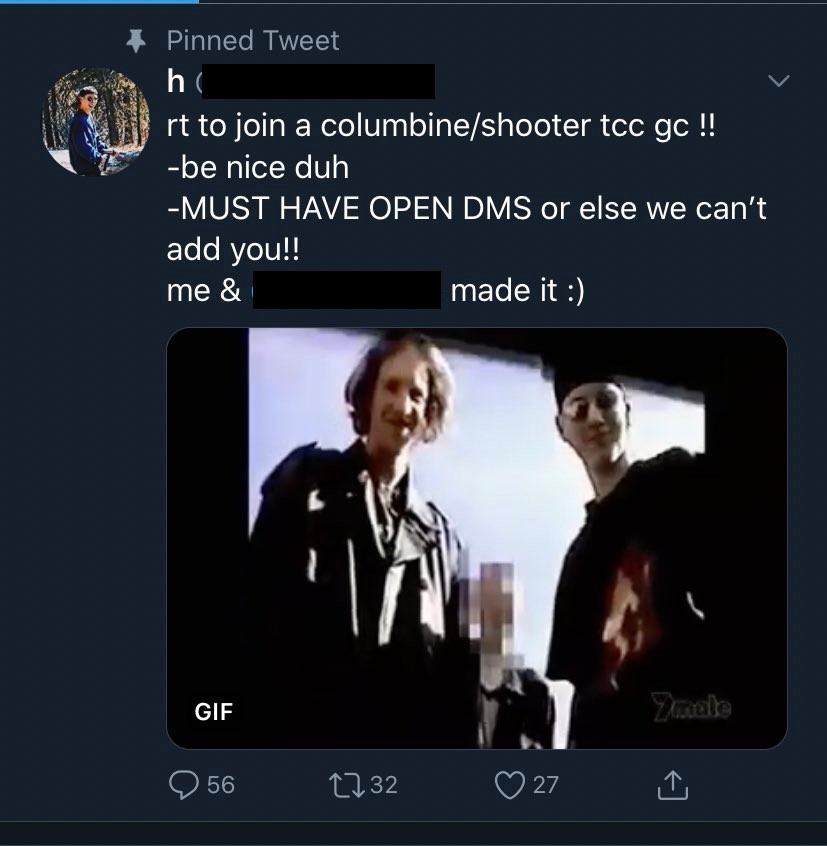
Henderson had a documented history of violent threats, extremist ideology, and prior criminal behavior. He was not supposed to be in school. He was not supposed to have internet access. He was not supposed to have contact with weapons. None of those prohibitions mattered once a gun was available to him.
Will there be charges against Thomas connected directly to the school shooting? That remains unclear. Prosecutors may limit the case to unlawful possession. They may decide that proving a direct link to the shooting itself is more difficult than the law allows. We’ve seen that caution before.
But the broader point stands whether additional charges are filed or not.
School shootings do not start at metal detectors. They do not start in hallways or cafeterias. They start wherever adults fail to secure their firearms, fail to take escalating behavior seriously, and fail to intervene before a gun ever reaches a child.
You can add more cameras. You can add more officers. You can add more press releases and vendor quotes. None of it will matter if guns remain accessible to the very people schools are supposed to protect children from.
One year later, Josselin Corea Escalante is still dead. Antioch High School is more heavily surveilled. A parent has finally been charged. And the country continues to pretend that the problem begins at the school door.
It doesn’t.
(Sources)
- Metro Nashville Police Seek Antioch High School Shooter’s Mother on Gun Charges
- Antioch High School Shooting: Shooter’s Mother Wanted on Nationwide Extradition Warrant for Gun Charge
- Deadly Antioch High School Shooting: One Year Later
- Parents Call for More Security One Year After Antioch High School Shooting
- Mother of Antioch School Shooter Surrenders in Las Vegas



 Real Crime with Trench Reynolds
Leave a comment