

The answer to the headline is yes, but it needs to be looked at with a critical eye.
This is not a culture war talking point. It is an uncomfortable pattern that shows up when you zoom out, and it deserves serious examination instead of reflexive denial or cheap outrage.
First, what actually happened.
Police now say nine people are dead, including the shooter.
Eight victims were murdered. The suspect died by their own hand, aka, the coward’s way out.
The violence began at a private residence, where the shooter killed her mother, 39, and her 11-year-old stepbrother. She then went to Tumbler Ridge Secondary School and murdered a 39-year-old teacher along with five students between the ages of 12 and 13. One student was found in a stairwell. The others were found in the school library.
Twenty-seven more people were injured, with at least two airlifted out in critical condition.
Officers arrived within two minutes of the initial call and encountered active gunfire. A long gun and a modified handgun were recovered. By the time police reached the suspect inside the building, she was already dead from what authorities say was a self-inflicted wound.
This is now among the deadliest school shootings in Canadian history.
Tumbler Ridge is a tiny, remote community of about 2,400 people. The high school serves roughly 160 students. Everyone knows everyone. Parents watched their children evacuate with hands raised while helicopters circled overhead. That is the human cost.
Now let’s talk about the shooter.
Police identified her as Jesse Van Rootselaar, 18. She dropped out of the school about four years ago. She began transitioning roughly six years ago. That timeline matters. It means she started transitioning while still connected to the school system.
Authorities say police had been called to her home multiple times over several years for mental-health-related concerns. Some of those calls involved weapons. On more than one occasion she was apprehended under British Columbia’s Mental Health Act for assessment. Firearms were seized from the home at one point and later returned after appeal. Her firearms license expired in 2024.
No motive has been made public as of this writing.
But when you put the pieces together, it is not hard to imagine a plausible scenario. A trans teenager in a small rural town. Years of documented mental health crises. Repeated police involvement. Dropping out of school. Social isolation. Family instability.
That combination does not exist in a vacuum.
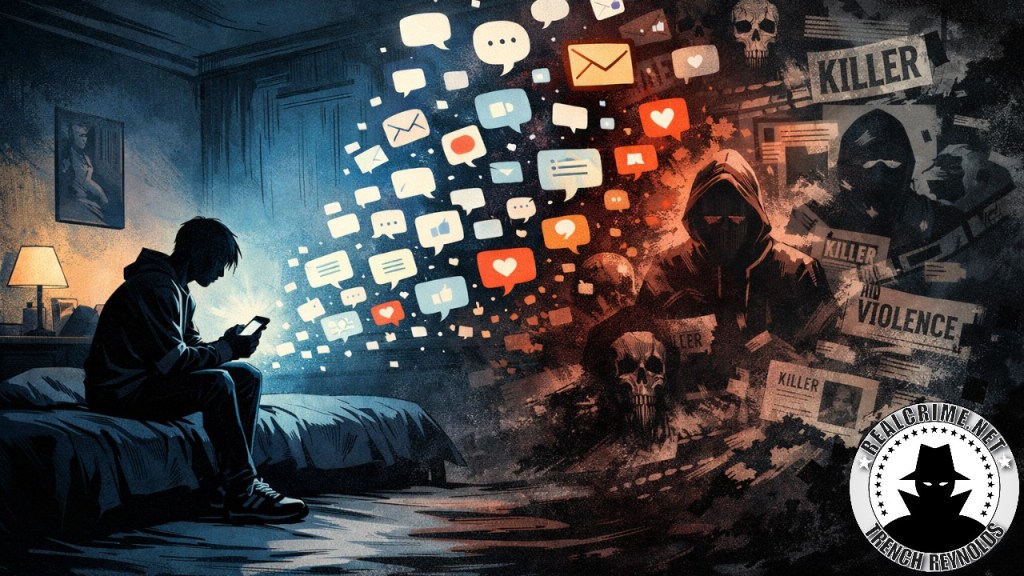
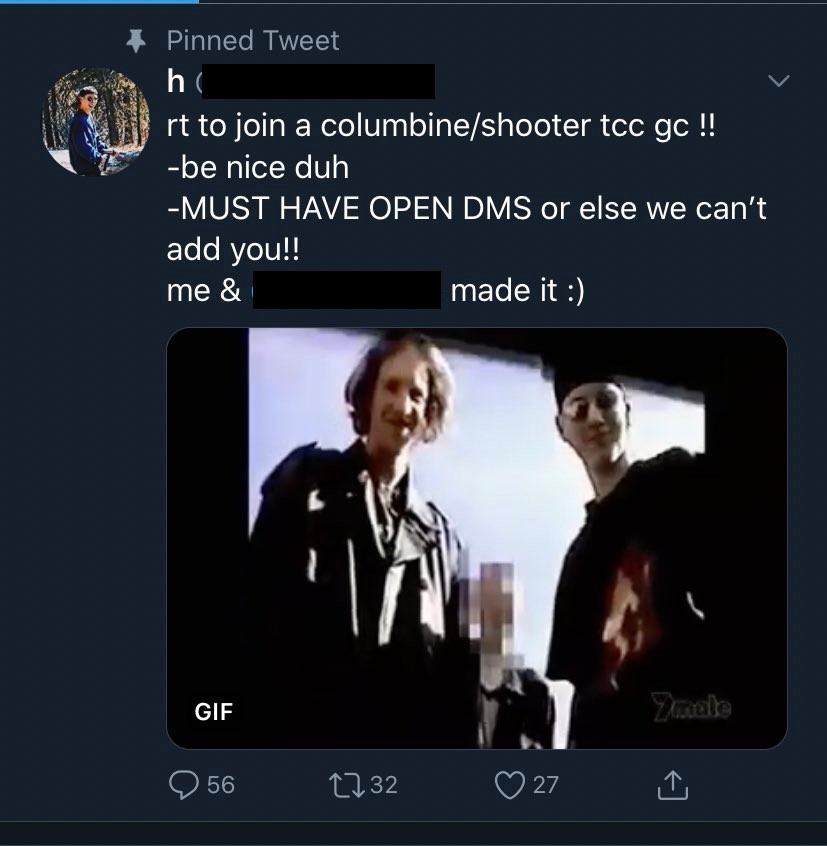
When someone becomes deeply alienated from their community, especially during adolescence, they go looking for belonging somewhere else. Online spaces often become that substitute. One of those spaces is what people now call the true crime community, or TCC.
The TCC is a loose ecosystem of forums, social media accounts, Discord servers, and content creators obsessed with mass killers and school shootings. It ranges from legitimate analysis to outright glorification. In its darker corners, perpetrators are treated like antiheroes. Body counts become scoreboards. Manifestos become inspirational material.
For someone who already feels rejected or invisible, that world can feel intoxicating. It offers identity, attention, and narrative. It provides scripts for grievance and violence.
That does not mean every isolated teen ends up there. But enough shooters show this pattern in their digital footprints that it can no longer be brushed off as coincidence.
Now comes the part nobody wants to touch.
This does not mean every trans woman is a potential school shooter. It does not mean being trans causes violence. It does not justify harassment or moral panic. Most trans people will never harm anyone.
At the same time, trans shooters appear overrepresented among school shooters over roughly the past decade relative to their share of the general population. The datasets are small and politically radioactive, but the pattern exists. Pretending otherwise helps no one.
Acknowledging that pattern also does not mean excusing mass murder.
Being trans does not absolve someone of slaughtering children. Mental illness does not either.
Jesse Van Rootselaar murdered kids.
Whatever suffering she experienced beforehand does not erase that.
If there is a “pipeline,” it is not some cartoonish conspiracy. It looks more like identity distress combined with social isolation. Mental health crises that go unresolved. Small communities with limited resources. Online spaces that romanticize violence. Easy access to firearms inside the home. A growing archive of previous shooters to study and emulate.
That is the pipeline.
A system that repeatedly fails vulnerable young people until one of them snaps and takes others with them.
Tumbler Ridge did not deserve this. Her stepbrother and mother did not deserve this. Those kids did not deserve this. That teacher did not deserve this.
Canada will now debate gun laws, mental health care, and community safety. The harder conversations will probably be avoided. The uncomfortable correlations will be waved away. The online radicalization angle will be minimized.
Meanwhile, the next isolated, unstable teenager will keep scrolling.
That is how these stories repeat.
Not because we talk too much about them.
But because we refuse to look at them honestly.
(Sources)



 Real Crime with Trench Reynolds
Leave a comment